In the decades following World War II, NATO members developed and manufactured five varieties of advanced third-generation tanks. This series of tanks includes the American M1 "Abrams" series, the German Leopard 2 series, the British Challenger series, the French "Leclerc," and the Italian "C1 Ariete." The Ukrainian military has received the first three primary battle tanks, and the European ones have already participated in combat.
Despite possessing tanks that consistently rank among the "Top Ten Most Advanced Tanks Worldwide," the Ukrainian military has been unsuccessful in turning the tide of the conflict. Not only have these tanks been destroyed by the numerous anti-armour weapons employed by the Russian army, but they have also had few opportunities to engage with Russian tanks.
People are likely to cite factors such as poor training quality of Ukrainian tank crews, limited quantity of Western tanks provided to Ukraine, new threats such as anti-tank missiles challenging traditional tanks, Ukrainian military lacking control of the battlefield airspace, and so forth when discussing the causes. These are only a few of the many reasons. It is possible that the poor performance of these powerful Western tanks on the Russian-Ukrainian battlefield was due to a significant philosophical mismatch between their basic design tenets and the nature of this fight if we take a step back and examine the bigger picture. As a result, NATO vehicles are having difficulty adapting to the conditions on the ground.
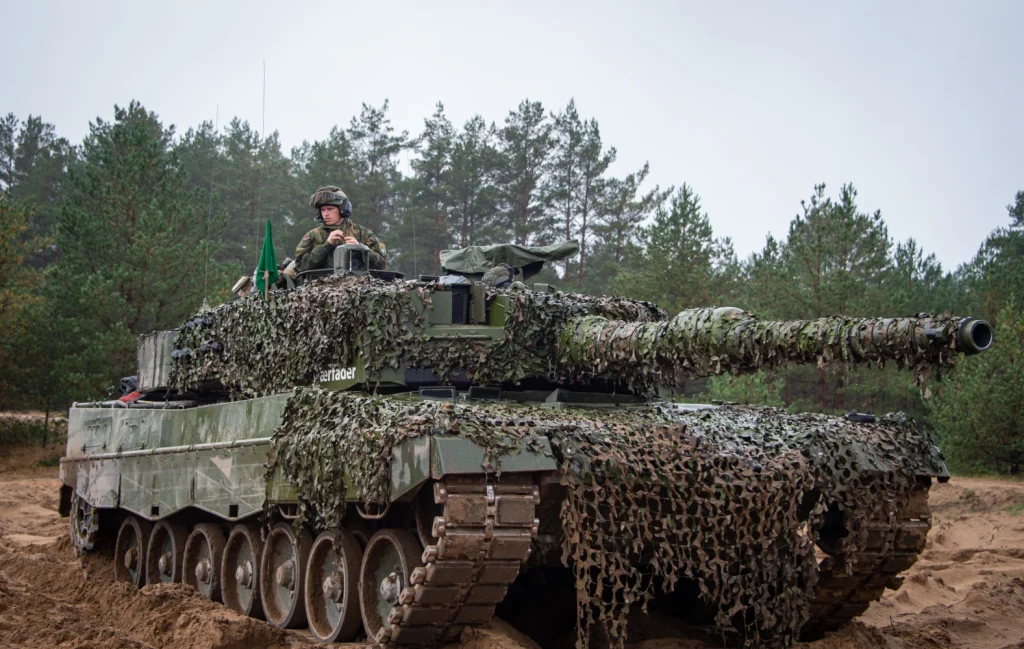
Norwegian Leopard 2A4 MBT is being replaced. Image: Twitter
It doesn't take a rocket scientist to figure out that the third-generation tanks that NATO countries and the Soviet Union built during the Cold War differed in several key respects. Compared to their NATO counterparts, Soviet tanks were frequently considered comparatively "rudimentary" regarding their technological sophistication and level of craftsmanship, especially regarding fire control systems and night vision capabilities. In each of these categories, it was exceedingly challenging for Soviet tanks to contend with NATO tanks. It is widely believed that the Soviet Army viewed tanks as "disposable assets" and prioritised quantity over quality. Consequently, the Soviet Army did not prioritise producing "high-quality" or refined tanks.
NATO countries found themselves at a disadvantage in comparison to the numerical dominance of the Soviet Union as a result of their smaller army numbers, in particular, the comparatively lower number of units of heavy technological equipment like tanks. The member nations of NATO attempted to improve tank quality to increase the ratio of friendly and adversary casualties, mitigating the Soviet Army's massive armoured forces. This was done to neutralise the Soviets' tank superiority. When NATO countries worked on developing third-generation tanks, they unwittingly cast themselves as the "defensive side" in a land conflict. The development of each faction's unique tank model directly responded to the potential demand and battlefield scenario described previously.
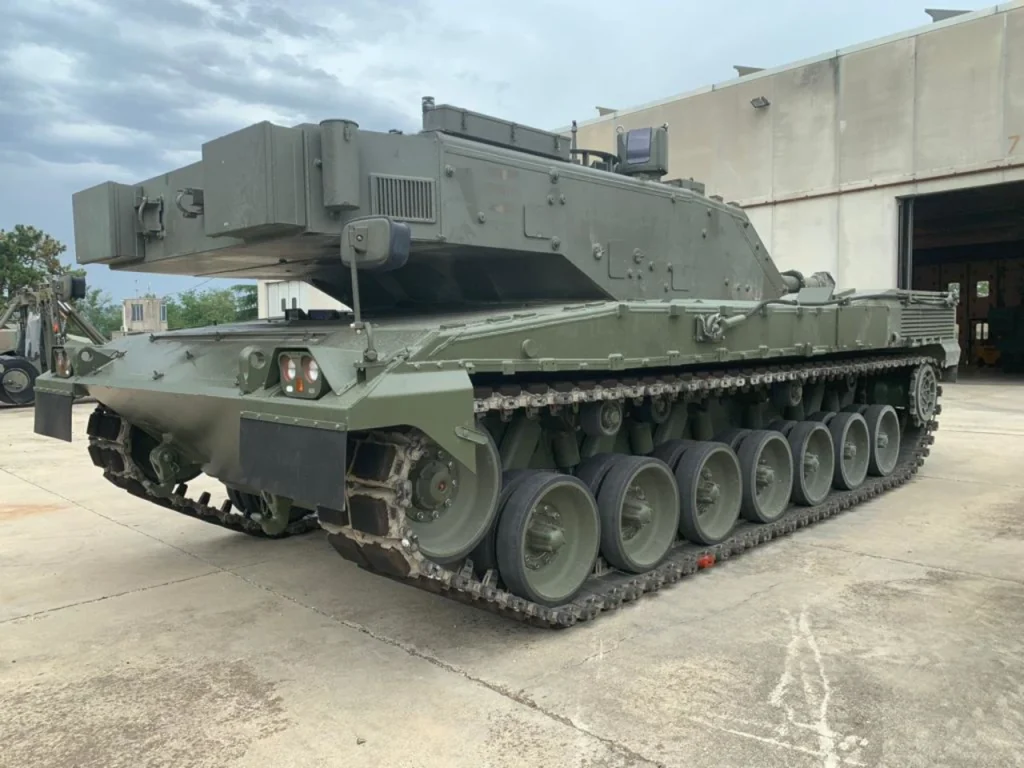
The first prototype AMV PT1 of the modernized Italian Ariete AMV tank.
Consequently, compared to the Soviet Army, NATO nations prioritised quality over quantity. They prioritised enhancing their tanks' effective firing range, accuracy, and mobility. This was crucial regarding the tanks' ability to manoeuvre around obstacles on the battlefield. To enhance the accuracy of NATO tanks, more electronic equipment was typically installed within the turrets. They had to install more potent tank engines to increase mobility and power these electrical devices. This also made it easier for them to move around. Consequently, the turrets and power batteries of NATO tanks during the same period were frequently larger than their Soviet counterparts. As a result, the overall dimensions of NATO tanks were larger than those of Soviet tanks.
In contrast, to conduct large-scale deep manoeuvre warfare on the flat plains of Europe, a typical "offensive side" mentality, Soviet tank designers focused on reducing the frontal profile of their tanks. This was done to optimise their ability to hide from enemy fire. As a direct result of this compromise, the capacity of Soviet tanks relative to NATO tanks was necessarily reduced. The size disparity between the two types of tanks is rooted in the fact that warfare's offensive and defensive sides assign tanks different functional duties.
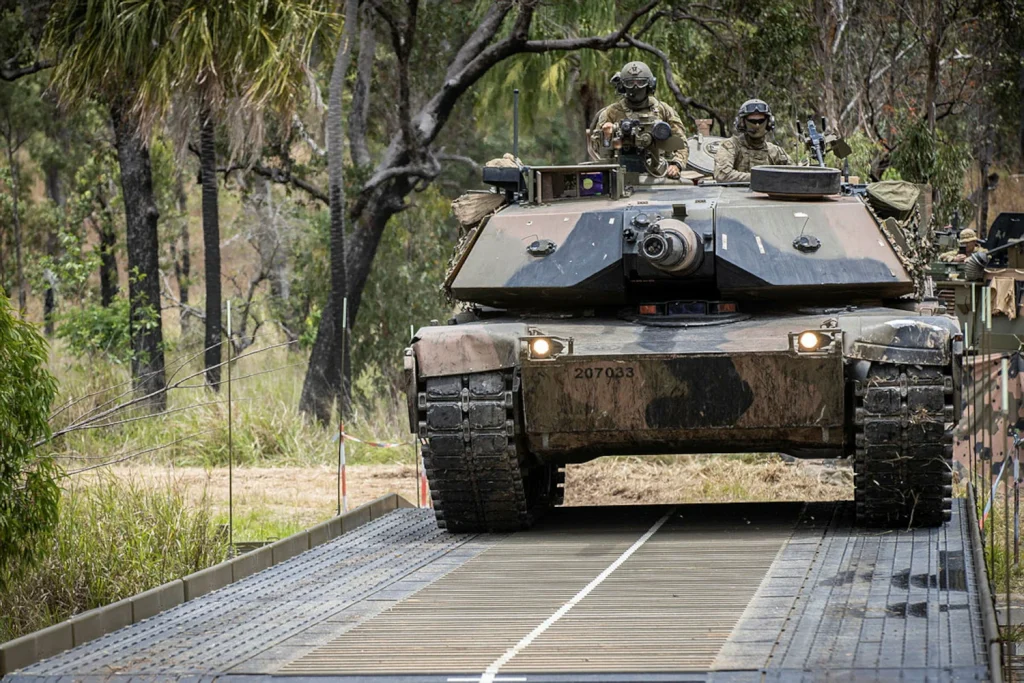
Australian Army operates the M1A1 SA Abrams tank. Image: Australian MoD
During the Ukraine conflict, and particularly during the Ukrainian military's recent counter-offensives offensives, the Russian military has adopted a more defensive posture. In contrast, the Ukrainian military has taken the initiative to launch attacks against Russian positions. This has been the situation during the most recent major offensives conducted by the Ukrainian military. Consequently, these NATO tanks, initially designed for defensive and counterattack purposes, have been used promptly in offensive operations. In offensive operations requiring close-quarters combat with the enemy, it is difficult for NATO tanks to fully exploit their advantages in longer effective firing ranges and high accuracy, and their "tall and wide" frontal profile increases the likelihood of being hit at close range. This makes it difficult for NATO tanks to fully exploit their advantages in longer effective firing ranges and high accuracy.
This demonstrates the importance of tailoring military equipment to the specific nature of a battle and the operational needs on the field, as well as the fact that the tactical context in which a tank is deployed can significantly impact the tank's performance. In addition, this demonstrates that the terrain on which a tank operates can significantly impact its efficacy.
It is possible that NATO-built tanks were never designed to be adapted to the terrain and operational requirements of the current Russian-Ukrainian conflict. It is usual for military vehicles and other equipment to struggle and not perform to their full potential if they were not intended to meet the specific tactical requirements of a given conflict. Military doctrine, topography, and the nature of the conflict can all significantly reduce the efficacy of even the most technologically superior tanks. The military must employ adaptable and flexible equipment when faced with such obstacles.



No comments:
Post a Comment